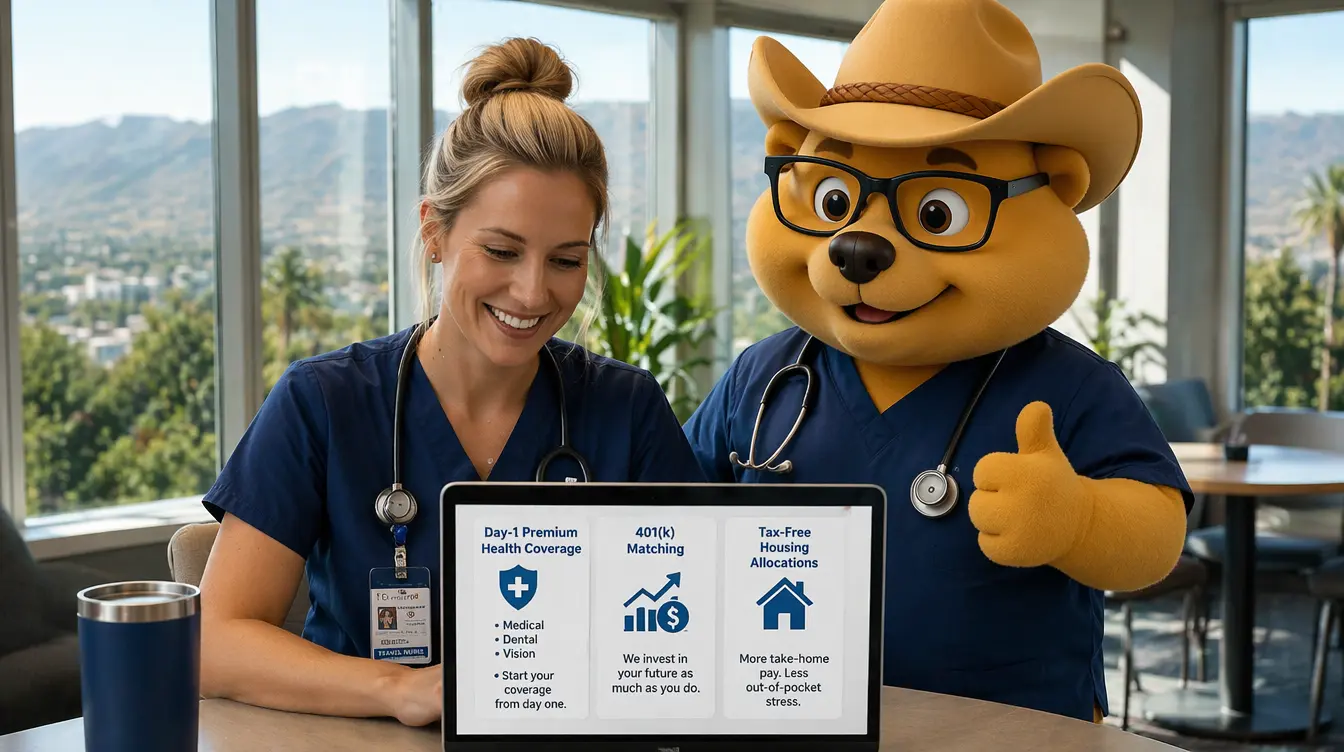

Hello clinical chameleons and career explorers! Uni-Ted here, wrapped up in my favorite blue scarf and ready to help you navigate one of the most exciting transitions in your professional life: switching your nursing specialty. In 2026, a nursing career is no longer a straight line—it is a vast landscape of opportunities that you can traverse as your interests and life goals evolve. Whether you are moving from Med-Surg to the ICU, or transitioning into high paying nursing roles like informatics or aesthetics, the ability to pivot successfully is a superpower. The healthcare market is currently favoring versatile clinicians who can adapt their skills to new settings, and with the right strategy, you can boost your satisfaction and your salary at the same time. Let’s dive into how you can make your next big move with total confidence!
Related Career Opportunities
Ready to explore a new path? Check out these top roles on our nursing job board:
Why 2026 is the Year for Nursing Career Growth
The nursing profession has reached a point where 'specialization' is the primary driver of both professional respect and financial reward. In 2026, the demand for nurses who can bridge multiple clinical areas is at an all-time high.
The Current State of the Nursing Market:
- Specialization Premiums: Hospitals are offering massive sign-on bonuses and higher hourly rates for high paying nursing roles such as CRNAs, Psychiatric NPs, and NICU specialists.
- Technological Pivots: The rise of telehealth and AI-integrated care has created an entirely new nurse career path in informatics and virtual nursing.
- Aging Population Impact: There is a critical surge in demand for geriatric specialists and home-based care, making these some of the most stable nursing career growth options this year.
- Credentialing Speed: New accelerated bridge programs and 'cross-training' contracts are making it easier than ever to switch specialties without losing your seniority or pay level.
- Shift toward Autonomy: Advanced practice roles are seeing expanded authority in more states, allowing nurses to take on more decision-making power in their new specialties.
To succeed in 2026, you need a plan that covers clinical competency, networking, and financial optimization.

Strategic Deep-Dive: How to Pivot Your Nursing Specialty Like a Pro
Landing the highest paying travel pharmacist jobs isn't just about finding an open role; it's about positioning yourself as a "plug-and-play" clinician who can handle the pressure of a new facility from day one.
Mastering Hospital Pharmacist Travel Assignments
In 2026, the most lucrative contracts are found in the inpatient setting. Hospital pharmacist travel assignments require a deep understanding of IV room protocols, TPN (Total Parenteral Nutrition) compounding, and multidisciplinary rounding. To secure these, you should highlight your experience with specific EMR systems like Epic or Cerner. Hospitals are willing to pay a massive premium for a traveler who doesn't need "system training" and can jump straight into the clinical workflow. These short term pharmacist contracts are often the backbone of a successful travel career.
Maximizing Your Travel Pharmacist Salary 2026
To reach the upper limits of the travel pharmacist salary 2026, you must be strategic about your location. While searching for travel pharmacist jobs near me is convenient, the highest pay is often found in "Value States" like California, Texas, and Washington. These states offer high hourly rates combined with significant tax-free stipends for housing and meals. By working with the best travel pharmacist agencies, you can ensure that your "blended rate" is optimized for maximum take-home pay, allowing you to build wealth much faster than in a traditional permanent role.
The Advantage of Short Term Pharmacist Contracts
Not every assignment needs to be 13 weeks. In 2026, we are seeing a rise in short term pharmacist contracts (4-8 weeks) designed to cover medical leaves or seasonal surges. These "rapid response" roles often come with the highest hourly rates in the industry. For a pharmacist, this provides the ultimate flexibility—you can work intensely for two months and then take a full month off to travel or spend time with family. This model is becoming the preferred choice for PharmDs who value their "time-wealth" as much as their financial wealth.
Selecting the Best Travel Pharmacist Agencies
Your recruiter is your most important partner in this journey. The best travel pharmacist agencies in 2026 provide more than just a job board; they provide clinical support, licensing assistance, and a dedicated advocate. When selecting an agency, look for one that understands the nuances of the pharmacy profession—someone who knows the difference between a decentralized clinical role and a staffing role. UHC Staffing specializes in connecting high-level PharmDs with elite facilities, ensuring that your travel pharmacist contracts align with both your clinical goals and your financial expectations.
Got Questions?
Frequently Asked Questions About Switching Nursing Specialties
Not necessarily. While some entry-level roles in a new specialty might start lower, many nurses use travel nursing or "crisis pay" contracts to maintain or even increase their income while they gain experience in their new field.
The highest earners this year include CRNAs, Psychiatric Nurse Practitioners, Nurse Anesthetist Educators, and specialized ICU/Critical Care roles.
Most nurses report feeling confident after 6-12 months. However, in 2026, many facilities offer "bridge" orientations that last 8-12 weeks to speed up this process.
It depends. Many bedside roles only require experience and certification. However, moving into advanced practice (NP, CRNA) or leadership roles typically requires an MSN or DNP.
Filter your search by "Specialty" and "Willing to Train" or look for "Nurse Residency" programs for experienced nurses. You can also reach out to a recruiter directly to find "bridge" opportunities.
Yes! "Step-up" assignments allow you to move from a lower-acuity floor to a higher-acuity one while earning a travel rate, which is a popular strategy for nursing career growth in 2026.
We act as your career agent. We help you identify transferable skills, find facilities that offer training, and secure contracts that pay you what you're worth while you learn your new specialty.