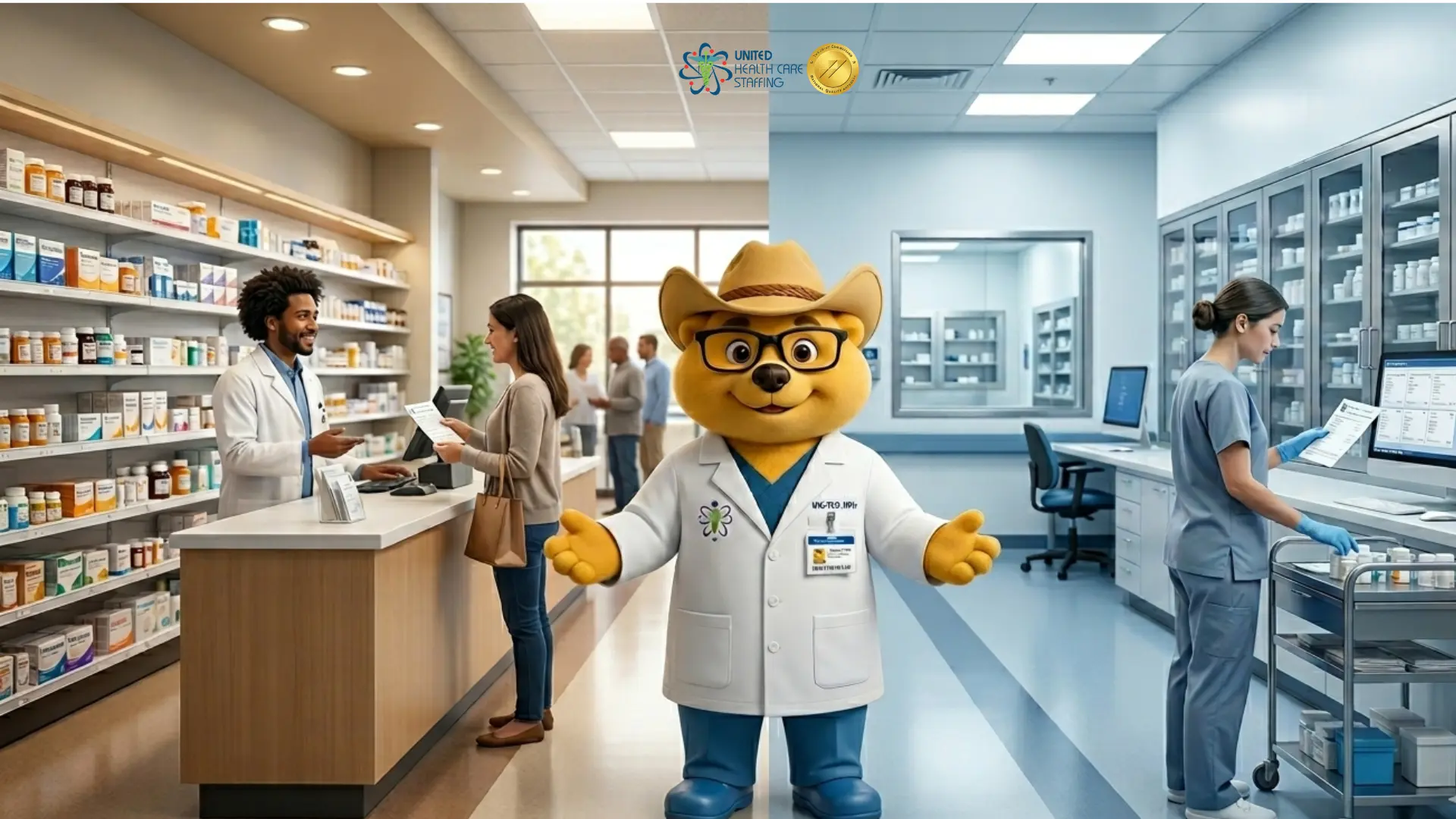
Hello medication experts and clinical thinkers! Uni-Ted here, wrapped up in my favorite blue scarf and ready to help you navigate one of the most important crossroads in your career: the choice between Retail vs hospital pharmacy. In 2026, the pharmaceutical world is expanding faster than ever, and both paths offer unique rewards, challenges, and financial incentives. Whether you thrive on direct patient interaction in a community setting or prefer the high-stakes environment of clinical pharmacy careers, making the right choice depends on your long-term goals. Let’s break down the differences so you can decide which setting aligns best with your professional vision!
Related Career Opportunities
Ready to find your perfect pharmacy setting? Explore these premium roles:
Why 2026 is a Defining Year for Your Pharmacy Career Outlook
The role of the pharmacist has transformed. No longer just dispensers, today's professionals are integral clinical decision-makers. Understanding the pharmacy career outlook in 2026 means recognizing that both retail and hospital settings have evolved to meet new healthcare demands.
The Current Landscape of the Profession:
- Clinical Authority: Pharmacists in all settings are gaining more prescribing authority and chronic disease management responsibilities.
- Technological Integration: AI-driven inventory management and robotic dispensing are standard in both retail and hospital hubs.
- Pharmacist Salary 2026: Compensation packages have become highly competitive, with travel and specialized roles seeing significant premiums.
- Specialized Pharmacy Roles: Demand is surging for experts in oncology, infectious disease, and tele-pharmacy.
- Work-Life Balance Trends: Facilities are offering more flexible scheduling and block booking to attract top talent in a tight labor market.

Strategic Deep-Dive: Retail vs Hospital Pharmacy – Which is Right for You?
Choosing your path requires a deep look at your daily workflow preferences and clinical interests. In 2026, the lines are blurring, but the core focus of each setting remains distinct.
The Retail Powerhouse – Community Connection and Accessibility
Retail pharmacy is the frontline of healthcare. In this setting, you are often the most accessible healthcare provider for the general public. Your day is centered around medication therapy management (MTM), patient counseling, and managing the business operations of a community pharmacy. If you enjoy building long-term relationships with patients and being a visible health advocate in your neighborhood, retail is an excellent fit. In 2026, retail pharmacists are also leading the charge in public health initiatives, such as point-of-care testing and advanced immunization programs. The pace is fast, but the immediate impact on patient education is incredibly rewarding.
Hospital Pharmacist Jobs – The Clinical Deep-Dive
If your passion lies in complex clinical interventions and interdisciplinary collaboration, hospital pharmacist jobs offer a high-intensity environment. Here, you work closely with doctors and nurses, participating in patient rounds and managing high-risk medications in the ICU, ER, or surgical units. Clinical pharmacy careers in hospitals often require a higher level of specialization, such as a residency or board certification. You are responsible for sterile compounding, pharmacokinetic monitoring, and ensuring patient safety in an acute care setting. For those who enjoy the medical detective aspect of the job, the hospital setting provides endless clinical challenges and intellectual growth.
Comparing the Pharmacist Salary 2026 and Benefits
Financially, the gap between retail and hospital pay has narrowed in 2026. While retail positions often offer a higher starting base salary, hospital roles frequently provide more extensive clinical ladders and specialty pay premiums. However, the true salary winner is often the travel pharmacist. By taking travel assignments in either retail or hospital settings, you can access tax-free stipends and crisis rates that significantly boost your total take-home pay. Many pharmacists use travel roles to experience both settings before committing to a permanent career path, allowing them to build a diverse resume while maximizing their earnings.
Future-Proofing Your Career with Specialized Pharmacy Roles
Regardless of the setting you choose, the key to a successful pharmacy career outlook is specialization. Top-tier pharmacy staffing agencies like UHC Staffing are seeing a massive demand for pharmacists who have niche expertise in areas like informatics, oncology, or nuclear pharmacy. These specialized pharmacy roles are often shielded from market fluctuations and offer the highest level of job security. By partnering with a recruiter who understands these specific pillars, you can ensure that your career continues to trend upward, regardless of whether you are behind a community counter or in a sterile hospital lab.
Got Questions?
Frequently Asked Questions About Pharmacy Careers
Generally, retail may offer a higher starting base, but hospital pharmacist jobs provide more opportunities for specialty pay and clinical advancement.
Common roles include Clinical Pharmacy Specialist, Oncology Pharmacist, Infectious Disease Pharmacist, and Emergency Medicine Pharmacist.
The outlook is very positive, especially for those in specialized pharmacy roles and those willing to take travel assignments in high-need regions.
Yes, though hospital roles often require a residency or specific certifications in sterile compounding and acute care protocols.
Agencies like UHC Staffing provide access to exclusive roles, handle contract negotiations, and offer premium benefits like tax-free housing stipends.